

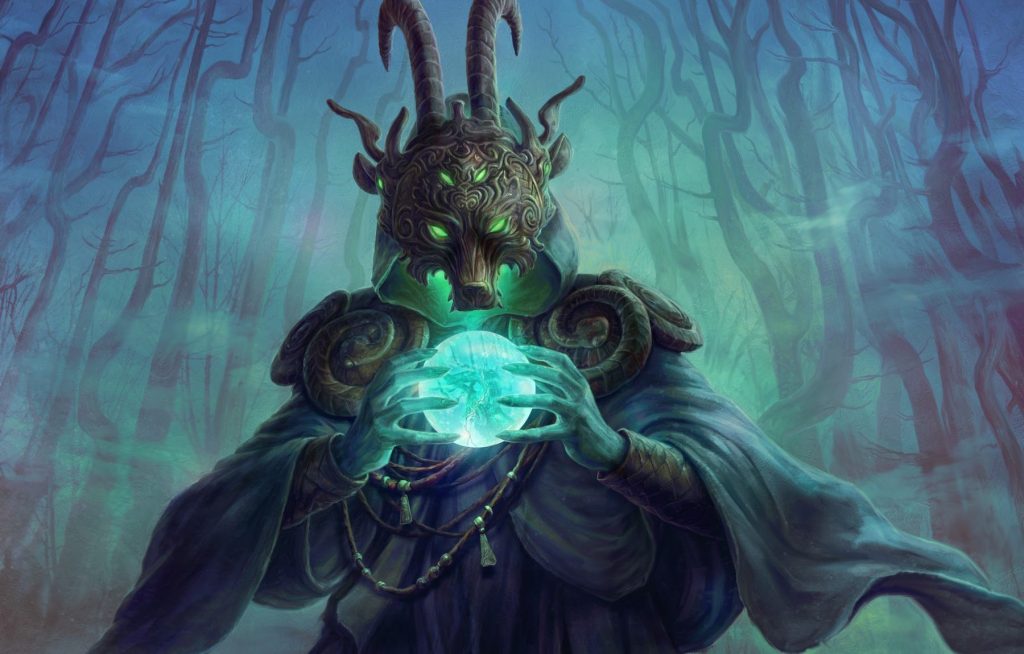
Image credits: Art by Jason A. Engle
The Preamble
Homebrew is great. I love making homebrew: Magic items, spells, subclasses, even full classes sometimes. Not only can it be really rewarding creatively, but it can also introduce some really fun variety into your games. Not to mention that players love subclasses that were basically made just for them. But admittedly, making a whole subclass (or especially an entire class) is a lot of work. And it can be tough to set aside time to work on something like that when you’re also studying for classes, working a job, supporting a family, and/or dealing with life in general.
But fear not! Because homebrew doesn’t always have to be a huge endeavor. There are plenty of ways to homebrew that take just five minutes, but can be just as impactful as the ones that take hours, days, or weeks. Hence the term “microbrewing:” The same amount of flavor, but at a fraction of the scale. Today, I’m going to talk about how to make subclasses more interesting just by playing with their spell lists.
Spell lists are a foundational aspect of D&D class design. In fact, as important as class features and flavor text are, you could argue that most of a spellcaster’s identity comes from its spell list. Druids command the earth with spells like Entangle and Wall of Stone, while Wizards alter reality with spells like Banishment and Reverse Gravity. A Cleric castigates foes with holy fire (Sacred Flame), while a Warlock buffets enemies with beams of unnatural force (Eldritch Blast).
These spells can also do a lot to define a subclass. Many subclasses for casters and half-casters provide lists of special spells that a character always has access to. In some cases, these spells are already on the base class spell list, but in others, new spells are added to help accentuate a certain theme of the subclass. A lot of these spell lists are super fun, and contribute a lot to a character. But sometimes, a spell list just won’t work for the character you have in mind.
This can be a matter of theming or power. For example, you may want to play a Fiend Warlock in a campaign where the nine hells have literally frozen over. The Fiend Patron’s subclass features don’t have any conflict with that, but the spell list doesn’t work so well; Burning Hands, Scorching Ray, and more would just feel off. But swap them out for Ice Knife and Rime’s Binding Ice, or maybe Frost Fingers and Snilloc’s Snowball Swarm, and now you’re getting somewhere. Plus, it will make the subclass feel a lot more unique, especially if you’ve had a Fiend Warlock at your table before.
Alternatively, sometimes you might have a cool idea for a character, but using the subclass that would work best for the concept would make you way weaker than the rest of the party. For example, the Nature Domain cleric has really lackluster features compared to other cleric subclasses, and several options on the spell list are either bad or highly situational. Rather than writing off the subclass entirely, you can add spells like Entangle, Healing Spirit, Call Lightning and Polymorph to make this a way more exciting subclass. In other words, opening up these conversations about variant spell lists could open up your table to more variety.
Lastly, you can use this approach to “patch holes” in supplemental content that you use at your table. The SRD is great, but it doesn’t include everything. So sometimes, you’ll look at a 3rd-party subclass and wonder, “how did they forget to include ___?” The truth is, they probably didn’t forget a spell; they just couldn’t use it for legal reasons. This is why 3rd party spell lists don’t include things like Absorb Elements, Hail of Thorns, Thunder Step, and more. Or maybe you want to spice up old subclasses with new content. Do you like the Freedom of the Waves or Freedom of the Winds spells from Critical Role’s Oath of the Open Sea subclass, but you’re not looking to play a Paladin? Could be good fits for a Fathomless Warlock.
This is Allowed!
You may read this and think, “Are you sure about this? I think I trust the designers more than I trust myself.” If that’s you, no worries! I get it. But this idea has been in official publications since 2014. The original 5e Dungeon Master’s Guide has a section on creating new character options. Found within that section is this paragraph:
Changing Spell Lists
Modifying a class’s spell list usually has little effect on a character’s power but can change the flavor of a class significantly. In your world, paladins might not swear their oaths to ideals, but instead swear fealty to powerful sorcerers. To capture this story concept, you could build a new paladin spell list with spells meant to protect their masters, drawn from the sorcerer or wizard lists. Suddenly, the paladin feels like a different class.
This even goes beyond what I’m suggesting. Modifying the spell list of an entire class is a huge task; if this is recommended, then modifying a much smaller subclass spell list is by no means out of the question.
To cap things off, I’m going to present an example of how you might actually put this into practice. Since we’re on the topic of the 2014 DMG, let’s apply this approach to a subclass introduced in that book: The Death Domain Cleric.
Example: The Death Domain Cleric
The Death Domain subclass is built around necromancy spells, necrotic damage, and melee attacks. It gets plenty of decent spells, but it suffers from two main issues; the first is that very few of its spells synergize with the melee focus, and the second is Animate Dead, a spell that can really slow down gameplay unless you’re super efficient at minion management.
First, let’s cover some spells that would make the subclass work better in melee. The only spells it really gets for this on the base spell list are False Life for some extra durability and Vampiric Touch for a nice melee attack. These are fine, but I think if we want this cleric to wade into melee regularly, we need to do better. There are some spells like Shield, Haste, and Conjure Minor Elementals that could be beneficial for any melee character, but those aren’t super thematic. Instead, here are some options to consider throwing on the spell list:
- Wrathful Smite is a necromancy spell that adds 1d6 Necrotic damage to an attack, and potentially frightens its target. The damage isn’t particularly powerful, but the Frightened condition is useful, and it doesn’t require your Concentration.
- Death Armor is a new spell from Forgotten Realms: Heroes of Faerûn that gives you (or another target) Advantage on Death Saving Throws, and deals 2d4 Necrotic damage to any enemy within 5 feet that hits you with a melee attack. Certainly thematic, but it consumes a costly component, so if gold is hard to come by in your games, this probably isn’t the best choice.
- Shadow Blade is a Concentration spell from Xanathar’s Guide to Everything that creates a powerful weapon made of “solidified gloom.” The spell deals 2d8 Psychic damage on a hit, which makes it better than any one-handed weapon you’d normally have access to, and it gives you Advantage on attack rolls while you are in dim light or darkness. Exciting for any melee character, and there’s no reason you can’t flavor it as a mace or a flail if a sword-wielding Cleric isn’t your style. Plus, since it requires no material components, this is a great fallback in case you’re ever caught in a fight without your equipment.
- Shadow of Moil, also from Xanathar’s, is another great spell for a melee character. It causes you to be Heavily Obscured, which gives you Advantage on your attacks and enemies Disadvantage to attack you. Like Death Armor, it also deals Necrotic damage to nearby enemies that hit you with attacks, but the range is better (10 feet instead of 5 feet) and it does almost twice as much damage on average. It requires Concentration, so you can’t pair it with Shadow Blade, but it works better once you have a nice magic weapon than Shadow Blade does.
Next, let’s talk about the whole summoning conundrum. In general, spells that conjure a lot of “minions” slow down gameplay. While it can be cool to have an army of undead, in practice, it rarely ends up being fun; or at least, it comes at the expense of a lot of other players’ fun. But if you take out the ability to command undead with this subclass, it could ruin the fantasy for a lot of people. To deal with this, here are some alternatives to Animate Dead:
- Summon Undead is a spell that conjures a powerful Undead Spirit that lasts for up to 1 Hour unless you lose Concentration or the spirit is reduced to 0 Hit Points. This spell arguably synergizes better with a Death Cleric better than Animate Dead, since it gives you options to deal Necrotic damage. Note that this has an expensive material component; as a DM, you may want to allow this cleric to ignore that component depending on how accessible gold is in your campaign.
- Phantom Steed, meanwhile, creates an entirely different kind of summon. The spell does nothing for your damage, but grants a huge boost to your mobility both in and out of combat by creating a mount with a speed of 100 feet. This adds hit-and-run tactics to your Cleric’s toolkit, which is great if you want to be making melee attacks but don’t have the survivability of a frontline character. And if you’re worried that the spell might be too powerful, the mount has an AC of 11 and disappears if it takes any damage, so it’s not hard to knock it out of the fight.
- Spirit of Death from The Book of Many Things is basically just an alternative to Summon Undead. The main difference is that Spirit of Death is a 4th level spell, while Summon Undead is a 3rd level spell. I would probably take Summon Undead over Spirit of Death 9 times out of 10, but if this is the better spell for you or your table for whatever reason, then go forth with my blessing.
- Since we’re talking about spells that summon undead, I also think Danse Macabre is worth mentioning, although it’s more similar to Animate Dead than other spells I’ve mentioned so far. You can use the spell to instantly create undead minions from the corpses of small or medium creatures within 60 feet of you, and these minions last for 1 Hour or until you lose Concentration. If you’re okay with minions, but don’t like Animate Dead for other reasons, this is a fair alternative.
There are also plenty of other spells you could consider. If you think frightening enemies is more thematically important for a Death Cleric than conjuring undead servants, then the Fear spell would be a great alternative to Animate Dead. Alternatively, you may want to tailor the spell list to a specific deity. For example, if your Cleric serves Hades, the occasionally-eponymous ruler of the Underworld, Greater Invisibility and/or Mordenkainen’s Faithful Hound could be appropriate options. It’s all about how you want to customize it.
Final Thoughts
How far you want to go with this is entirely up to you. You could allow players to swap out just one or two spells from their list at your discretion, or you could throw the existing spell lists out the window and let your players build them from the ground up (assuming your players will pick thematically relevant options). I don’t recommend the second option for most tables, but if that sounds good to you, go for it.
As with any tweaks to existing material, this works best as a conversation between a DM and one or more players. I think this should be a part of session zero, or maybe something you bring up in text threads/Discord messages before session zero. Every table is different, so you shouldn’t assume this will be allowed, but there’s absolutely nothing wrong with asking.
Ultimately, I think this is a great way to add a little more customization and freedom to the character creation process. If you disagree, that’s okay! But if you do agree, and using this approach enables the creation of a really cool or really fun character, please feel free to email me at shieldoffaith5e@gmail.com. I’d love to hear about the kinds of stories this inspires you to tell!

Leave a comment